In the past few years, the race to define the next generation of smart glasses has spurred a wave of strategic acquisitions. Companies are moving aggressively to secure the foundational technologies that will shape the market for years to come:
 Meta has acquired Luxexcel for 3D-printed prescription lenses, ImagineOptix for holographic waveguides, and partnered with Eulitha for curved waveguide mass production.
- Snap purchased Compound Photonics, a leader in microdisplays, to bolster its AR ambitions.
- EssilorLuxottica acquired Nuance Audio and Pulse Audition to focus on hearing assist glasses.
- Apple, Google, and Amazon are quietly investing in optics, AI, and immersive technologies to solidify their positions in this emerging space.
This land grab isn’t just about collecting innovative technologies—owning the foundational elements that will shape the smart glasses market for years to come.
The Power & Space Challenge
While advances in display technologies such as MicroLED and hybrid LCoS systems promise superior brightness and expansive fields of view, they also introduce complex engineering trade-offs:
- Higher Power Consumption: Advanced displays demand higher energy throughput, significantly impacting battery longevity and operational uptime.
- Space Constraints: Compact frame designs limit the physical volume available for batteries, sensors, and processing units, necessitating ultra-efficient layouts.
- Thermal Management: Heat dissipation becomes increasingly difficult in miniature, tightly integrated designs, risking component degradation or reduced performance.
These challenges highlight a fundamental question: How can engineers scale smart glasses when power budgets are increasing, yet the available physical and thermal envelopes remain constrained?
Implications for Scalability
For smart glasses to transition from prototype innovations to widespread adoption, the industry must prioritize breakthroughs in three interconnected domains:
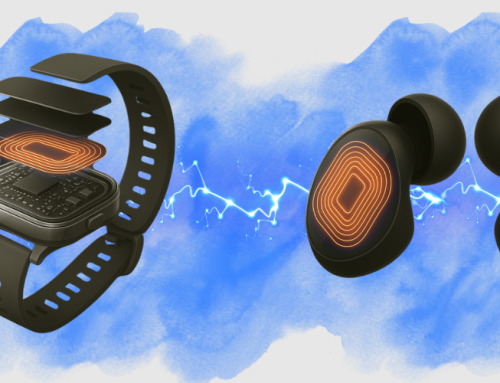
 Next-Generation Charging Platforms: Wireless power transfer and hybrid energy harvesting systems must adapt to sustain rising energy demands while preserving user-centric aesthetics.
- Integrated Hardware Architectures: Achieving an optimal balance of computational performance, energy efficiency, and miniaturized form factors will require advances in silicon engineering and multi-functional components.
- Manufacturing Scalability: Innovations in materials science and high-throughput production techniques are critical to overcoming the barriers of cost and consistency in mass production.
The “Race for the Face” is ultimately about more than optics. It’s a systems engineering challenge—the intersection of power management, thermal dynamics, and spatial optimization—that will define the next era of personal computing. Companies that successfully innovate across these dimensions will set the standards for this transformative industry.
What Comes Next?
The trajectory of smart glasses hinges on resolving these engineering barriers. Will the industry solve the power and space conundrum in time to enable true mass-market adoption? Or will these constraints stymie progress, relegating smart glasses to niche applications? The answers will not only shape the future of wearable technology but will also determine how humans interact with digital ecosystems in the years ahead.